

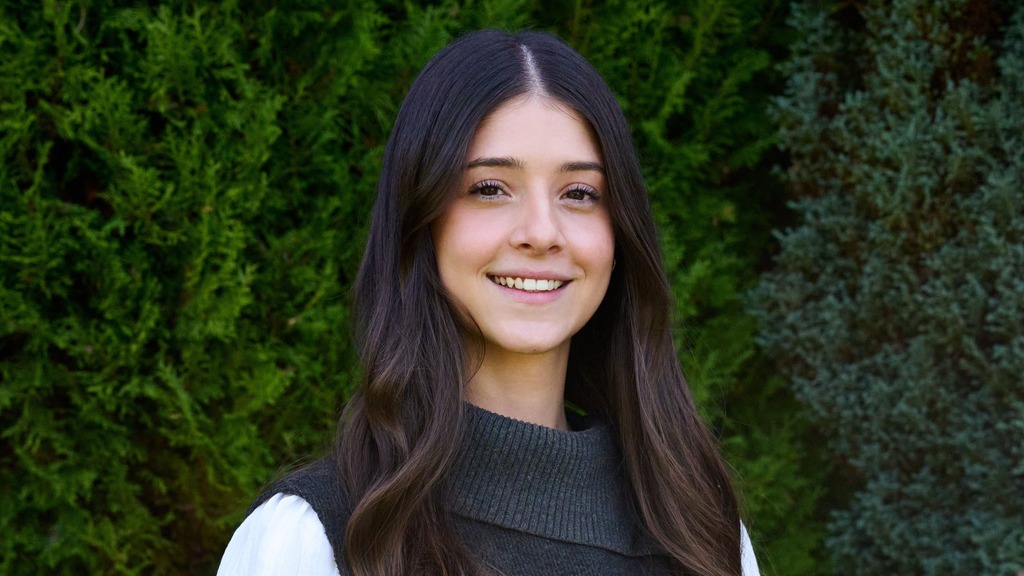
Spend a few minutes with Loreto, a Recovery Counsellor at NEOVIVA, and you quickly understand why one client described her as “a safe space”. You simply feel at ease in her presence. For Loreto, there is no greater compliment.
People often arrive in treatment feeling nervous and unsure if anyone will really understand them. They worry about having to explain themselves. With Loreto, conversations are never rushed. She listens closely, asks thoughtful questions, and genuinely cares about each person’s story. There is no judgement and no pressure to have all the answers.
Loreto’s caring nature did not happen by accident. These qualities were shaped long before Loreto started working in addiction recovery.
A calling from an early age
Loreto grew up surrounded by strong, compassionate women. Her mother is a psychologist, and her grandmother shares the same empathy and gift for listening that Loreto is now known for. Looking back, Loreto sees how much they influenced her. Both women cared deeply about others and were naturally drawn to helping the people around them, shaping Loreto long before she chose her own path.
By the time she was ten, she had already decided she wanted to study psychology.
“People used to ask me why I didn’t want to be a doctor because I had such good grades,” she says. “But I knew with such certainty. I always wanted to be a psychologist.”
Loreto has always been empathetic, but she knew that wasn’t enough on its own. She wanted the knowledge and right training to support people properly. She worked hard to achieve professional qualifications that would help turn her compassion into real support for others.
When addiction became personal
It was Loreto’s own family experience that drew her towards addiction recovery.
For years, she watched her uncle struggle with cocaine addiction. Like so many families affected by addiction, Loreto noticed how it changed the atmosphere of an entire family. She witnessed the constant worry, the difficult conversations, the hope for better days and the fear of being let down again.
“I saw how much it impacted his immediate and wider family,” she says.
This experience taught her that addiction is rarely just one person’s struggle. Families also live with the uncertainty and often carry the emotional burden too. Seeing this unfold in her own family left a lasting impression.
“I remember thinking, ‘Is there really no way that he can get the help he needs?’”
Loreto wanted answers. Instead of avoiding those difficult questions, she decided to learn more about how addiction starts and how people can recover.
The journey to recovery work
While studying for her Master’s in Psychotherapy, Loreto got her first opportunity to work in addiction recovery at a day centre in Ireland. She supported people with cocaine and crack cocaine addiction. Meeting people in recovery made her even more interested in their stories, the different paths that brought them to treatment, and what helped them move forward.
One experience in particular changed the way she thought about recovery.
“Before that, I was always seeing things through the lens of the psychologist or therapist, and I thought that was the most important part of treatment,” she explains. “Seeing the way people in recovery help each other was mind-blowing for me.”
That moment stayed with Loreto. She realised that professional knowledge is just one part of recovery. Shared understanding, real-life experience and human connection can be just as powerful.
After moving to Switzerland with her partner, Loreto looked for a role where she could work more closely with clients in a residential setting. This search led her to NEOVIVA, where she now uses her training and her natural curiosity about people to help them rebuild their lives.
Creating a safe space
Being described as “a safe space” has stayed with Loreto.
“One client told me I was a safe space for them,” she says. “And that’s exactly what I hope to be.”
For Loreto, trust begins with listening. She often says how important it is for people to feel heard and understood. Sometimes, simply sitting with someone and listening without judgement is enough.
This approach goes beyond formal sessions. As a Recovery Counsellor, Loreto spends a lot of time with clients throughout their day. Some of the most meaningful moments happen during a walk, over lunch, or while working on a puzzle together.
“The connection comes in those small moments,” she says.
These moments might be a smile from a client, a conversation that helps someone see things differently, or a quiet thank you at the end of a difficult day. They may seem small, but Loreto believes this is often how trust starts.
“You connect first as humans,” she says. “Then as a Recovery Counsellor and client.”
This simple philosophy sits at the heart of everything Loreto does. She believes recovery begins with human connection. People need to feel safe enough to be themselves before they can move forward.
Driven by curiosity
Loreto’s curiosity goes beyond her work. It shapes how she sees people at work and in everyday life.
Travel is one of Loreto’s biggest passions. She has already visited over 35 countries.
“I love travelling,” she says. “I love getting to know other cultures and seeing different ways of living.”
Experiencing different cultures has shown Loreto something she sees every day in recovery: no two lives or journeys into addiction are ever quite the same.
The same curiosity fuels her love of reading. Loreto is rarely without a book. Crime thrillers sit alongside psychology books, and podcasts about mental health often fill her spare time. Learning is not something she leaves behind when the workday ends.
“It’s definitely my thing,” she laughs. “Even outside work, I’m reading about mental health or watching something related to psychology.”
Even though Loreto has just finished her Master’s degree, she is already thinking about future courses, further study, and new areas of research.
“When I finish studying, I’ll keep studying,” she says.
For Loreto, learning is not just about getting qualifications. It is her way of understanding people better.
The woman that her team sees
If you ask Loreto how her colleagues would describe her, she laughs before answering.
“Positive,” she says.
This is easy to believe. Even when talking about the challenges of addiction recovery, Loreto focuses on what is possible, not just the obstacles. She has a contagious optimism and believes people can change, grow, and find their way forward, even when the path is not easy.
That optimism is grounded in experience. She has seen clients rebuild relationships, regain confidence and begin to imagine a future that once felt out of reach.
Maybe that is why colleagues and clients are drawn to her. She brings warmth, positivity and a genuine belief in everyone’s potential.
Everything will pass
If there is one philosophy that guides Loreto in life and work, it is a simple one:
“Everything will pass.”
Loreto shares this belief with clients and reminds herself of it during tough times. While the world often tells us to fight or push away uncomfortable feelings, Loreto sees things differently. Sadness, anxiety, fear and uncertainty are all part of being human. The real challenge is not to get rid of these feelings, but to remember they are temporary.
“Accept what you’re feeling now,” she says. “Accept the discomfort, because it will pass.”
Loreto often uses a simple metaphor to explain this idea. Imagine you are driving a bus. Passengers get on and off during the journey. Some are friendly, some are loud, and some make you feel uncomfortable. If your thoughts and feelings are like these passengers, the important thing to remember, she explains, is that they do not decide the destination. You are still the driver.
It is a simple image, but one that reflects how Loreto sees life and recovery. Difficult thoughts and feelings may be part of the journey, but they do not have to decide where it ends.
Loreto hopes every person she meets can remember this: no matter how hard today feels, you are still the driver.
Frequently Asked Questions
What should I do if someone in my family is struggling with addiction?
It can be frightening and frustrating to see someone you care about struggle with addiction, especially if they don't think they need help. Try to keep communication open, listen without judgement and share your concerns without blame. You cannot force someone to change, but you can encourage them to get professional help. Remember to recognise your own limits and get support for yourself too if you need it
How can I support a family member who is receiving treatment for addiction?
One of the most helpful things you can do is listen without judgement and recognise that recovery takes time. Your family member might be dealing with difficult emotions and may not have everything figured out straight away. Where appropriate, you can participate in family sessions, learn more about addiction and ask the treatment team how best to help while still respecting your family member’s privacy and independence.
How can I support a family member when they return home after addiction treatment?
Returning home can bring new challenges as someone adjusts to everyday life. Encourage open conversations without expecting everything to return to normal immediately. Support your family member to keep up with continuing care and stay connected to their recovery support network. Before they return home, it can be helpful to discuss boundaries, expectations and any practical details
How do I look after myself when someone in my family has an addiction?
Addiction can affect the whole family, causing worry, uncertainty, exhaustion and sometimes guilt. Supporting someone does not mean taking responsibility for their recovery or neglecting your own wellbeing. Setting healthy boundaries, talking to someone you trust and seeking professional or peer support can help. Family support groups also offer an opportunity to connect with others who understand what you are going through.
