
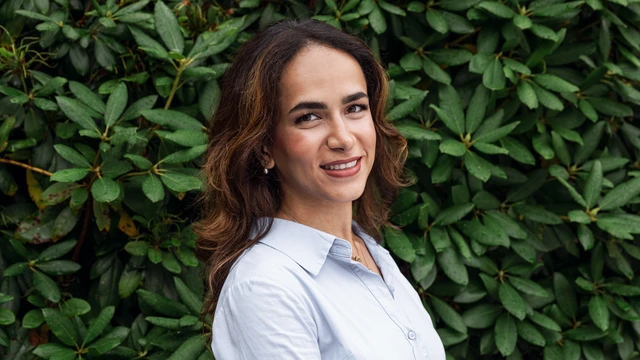
Parandis Hafezi
Psychotherapist in Training
Her bright energy is balanced by calmness, self-reflection and a willingness to question her own assumptions, qualities shaped by her upbringing in Iran. Her father encouraged exploration, introducing her to diverse people, places and cultures across the country. This adventurous spirit led her from Tehran to Switzerland and Italy. The strong women in her family instilled the values of kindness, attentive listening and thoughtful communication.
As a psychotherapist-in-training, Parandis is dedicated to ongoing learning. She is inspired by Iranian psychologist Parirokh Dadsetan and is particularly interested in systemic family therapy and the cultural factors influencing addiction and recovery. Outside of NEOVIVA, she enjoys horse riding, walking her husky, reading psychology literature, and exploring historic cities.
Academic career
2023 – MSc in Cognitive Psychology in Health Communication, Università della Svizzera italiana, Lugano, Switzerland & Università Vita-Salute San Raffaele, Milan, Italy
2019 – BA in Psychology, Islamic Azad University, Tehran Medical Branch, Iran
2025-present – Psychotherapy Training, Mara Selvini Palazzoli School of Psychotherapy, Mendrisio, Switzerland
Professional career
2022-2023 – Vice President of Talent Management Department, AIESEC in Lugano, Switzerland
2022 – Field Project, Navisano (Comparis), Switzerland
2017-2018 – Psychological Workshop Organiser, Goftaneh Group
Certifications
CBT
Child & Adolescent Psychology
Modern Educational Psychology
Teacher Training Course (TTC)
Selected Publications
Kachooei, M., Ashrafi, E., Rouchi, M., Hosseinpour, A., Hafezi, P. (2019). Prediction of eating disorder symptoms among female students based on experiential avoidance and mindfulness. Medical Sciences Journal, 29, 92-99. DOI: 10.29252/iau.29.1.92.