

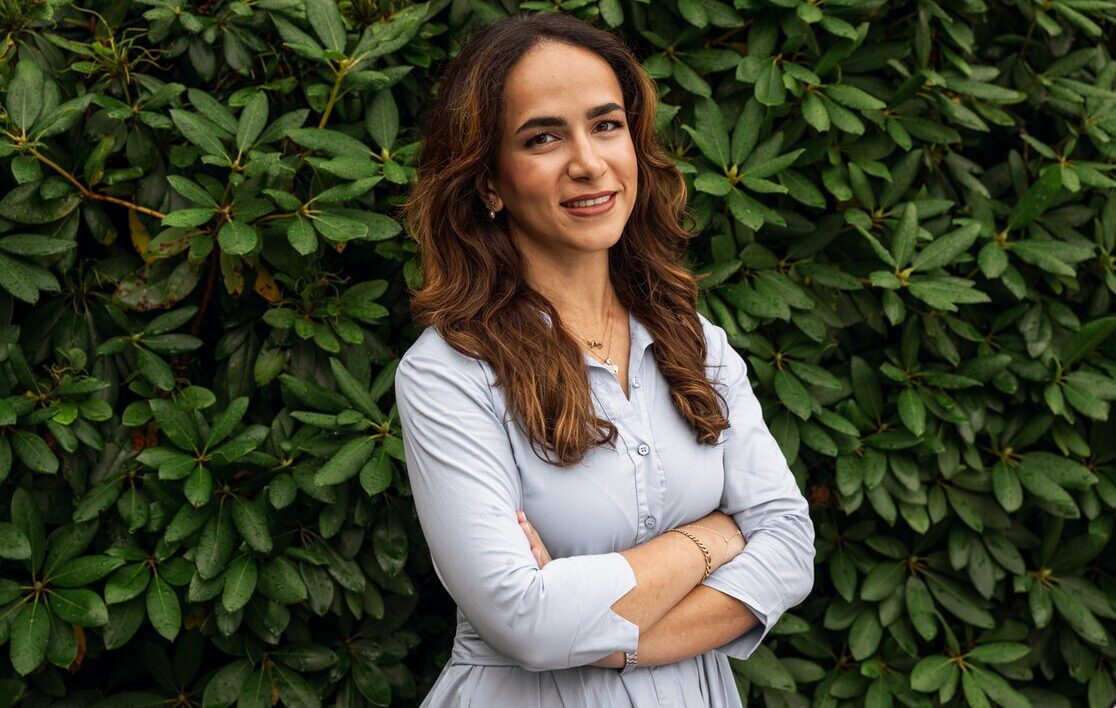
Parandis is one of those people whose enthusiasm and warmth stand out straight away. She is open and quick to laugh, but you quickly sense there is a sharp mind behind her easy manner. She is genuinely interested in people, attentive to their differences, and seeks to understand why we think and behave the way we do.
Conversation with her flows seamlessly from psychology and family dynamics to culture, travel and languages. She is perceptive, willing to question cultural assumptions about addiction, and reflective about her own biases. Above all, she is curious. It is a curiosity that has shaped the direction of her life and the way she sees other people.
Growing up in Iran, her father had a rule of sorts: before looking too far beyond your own country, you should get to know it first.
Whenever possible, her parents took Parandis and her brother on trips to new places. The family explored different cities and regions in Iran, discovering the diversity of cultures and lifestyles within the country. Her father believed that understanding her own country first would help her see other countries in a new way.
“He was right,” says Parandis.
Looking back, she believes these trips shaped her perspective on people and places. Her curiosity has led her from Tehran to Switzerland and Italy, through studies in psychology and coaching, and now into psychotherapy training.
The people who shaped her
Her father encouraged her curiosity, and Parandis also recognises qualities from other family members that she brings to her work. She speaks fondly of both grandmothers.
“The way they behaved and interacted with other people was always really interesting for me,” she says. “They were my role models, both of them.”
Her mother has also been a significant influence. Parandis admires her mother’s ability to listen and choose the right words. Even now, when unsure how to express something difficult, she often seeks her mother’s advice.
“My mum is my ChatGPT,” she laughs.
An idea that began at age thirteen
At thirteen, uncertain about her academic future, Parandis’s mother took her to see a psychologist. The psychologist discussed her interests and strengths and suggested careers like psychology, psychotherapy, teaching, or even tour guiding.
Parandis was fascinated, not only by what she learned about herself, but also by the psychologist’s work. Psychology stayed with her, not just as a suggestion, but because she experienced its impact firsthand.
She chose human sciences in high school and later studied psychology at Tehran University of Medical Sciences. Attending a medical university enabled her to interact with students from other disciplines and observe diverse healthcare settings. Near the end of her degree, she and her classmates visited various services to observe psychology in practice, including an addiction facility.
They spent two days at the addiction placement, but the experience stayed with Parandis. She was particularly struck by how people with addiction were treated after leaving the clinic.
“In my country, it is taboo,” she says. “Many of the people were struggling with how to go back to society because everybody would point a finger at them.”
This question remained with her: Why does society treat people with addiction so differently?
Questioning what we think we know
Parandis’s understanding of addiction has developed over time. Raised in a culture where addiction is heavily stigmatised, she became increasingly aware of the ways in which stigma influences both individual and collective perspectives.
“I actively questioned these societal assumptions. Once you work with people struggling with addiction and see them every day, the experience changes your perspective,” she says. “People with addiction are just people.”
Parandis values continuous learning. As her experience working with individuals affected by addiction has increased, her perspective has shifted. She now recognises that even the term ‘addiction’ can evoke fear and create social distance.
“Whatever mental health problem someone is seeking treatment for, whether that is depression, anxiety, or addiction, beneath the label there is a human being in pain who needs help. For me, it is not about the diagnosis; it is about the wounded soul beneath. Of course, there are different therapeutic approaches depending on the issue, but someone seeking addiction treatment is no different. They are seeking help, and they should receive it.”
This shift demonstrated to her that curiosity entails both acquiring new knowledge and critically examining existing beliefs.
Finding her place
After completing her bachelor’s degree, Parandis planned to study in Canada, but the pandemic altered her plans. In September 2020, she moved to Switzerland. It was a big step. Although close to her family in Iran, she felt a strong need to experience life elsewhere.
“I really love my country,” she says. “But I always thought that I needed to get out because some things were not working for me.”
In Switzerland, she found safety, independence and the freedom to shape her future. Although she grew up in a supportive family where women had a strong voice, she realised she wanted that same sense of possibility reflected in the society around her.
“Once I did leave, I found myself,” she says.
She once expected Canada would become her home, but Switzerland exceeded her expectations.
“I came here and thought, ‘No. This is it.’”
Building her new life required courage and determination. Parandis completed a Master’s in Cognitive Psychology and Health Communication in Switzerland and Italy, learned Italian, and began psychotherapy training in Italian. She is now considering relearning German to expand her professional opportunities.
Her parents once hoped she would pursue a more predictable career, such as accounting. However, Parandis chose psychology, motivated by her curiosity about people and behaviour.
Why families matter
Parandis’s psychotherapy training focuses on systemic family therapy, which examines individuals within the context of their relationships and surrounding systems. This approach resonated with her.
Family has always been important to Parandis, both personally and culturally. She is interested in what occurs when individuals work hard to change but return to unchanged family dynamics.
“You can do a lot of therapy and then go back to the same system,” she explains. “And that is where the real challenge lies. You may understand yourself differently, but knowing what to do when you return to the same patterns and relationships is another journey altogether.”
She is especially inspired by Mara Selvini Palazzoli, known for her work in systemic family therapy, family relationships, and eating disorders. Parandis also admires psychiatrist and psychotherapist Irvin Yalom, as well as Iranian psychologist Parirokh Dadsetan.
Dadsetan is especially important to her. As an Iranian psychologist who studied in Geneva and was a student of Swiss psychologist Jean Piaget, Dadsetan became a key figure in modern psychology in Iran. For Parandis, seeing what Dadsetan achieved inspires her.
Parandis is particularly interested in involving families in treatment and recovery, rather than keeping them outside the therapeutic process.
Why NEOVIVA stood out
When Parandis began looking for the right clinical environment, she researched several treatment centres in Switzerland but consistently returned to NEOVIVA.
She was drawn to NEOVIVA’s diverse approaches and programmes and was particularly interested to learn that Clinical Lead Mayte Parada also had a background in systemic therapy.
“I thought, ‘This is a sign,’” she says, adding, “Though, I don’t really believe in signs.”
Instead of waiting for a vacancy, Parandis submitted a spontaneous application introducing herself, her background and her motivation to join the team. Mayte responded. This initiative and enthusiasm are characteristic of Parandis.
Parandis values NEOVIVA’s collaborative multidisciplinary environment, where psychotherapists, psychologists, Recovery Counsellors, and other clinical team members work closely together. As a relatively new team member, she is already contributing through psychological workshops, which aligns with her natural confidence and passion for sharing ideas.
Clinical Lead Mayte Parada says:
“What stands out about Parandis is her curiosity. She genuinely wants to understand people, but she is also prepared to question her own assumptions and keep learning. She notices detail, listens closely and naturally thinks about the wider family and cultural context around a person. There is a lot of enthusiasm there, but also thoughtfulness and humility.”
More than hearing
In addition to being a confident speaker, Parandis has always been a natural listener. Even as a child, older friends and sometimes strangers confided in her.
“It’s not about hearing. It’s about listening.”
She is attentive to small details, even recalling things others mention in passing. People are frequently surprised by her memory.
“When you truly listen to someone, you remember the little things.”
Being comfortable with differences
Her life experiences have made Parandis comfortable with differences and interested in people from diverse backgrounds.
“I really like meeting people with different backgrounds,” she says. “We always get along very well.”
This approach does not ignore differences, but allows her to stay curious and engaged with each individual.
Curiosity in practice
Parandis appreciates how different perspectives converge around each client. She compares the NEOVIVA team to a wristwatch: many individual parts, each with a unique function, working together to create something meaningful.
Her own interests centre particularly on systemic therapy, culture and the role relationships can play in addiction and recovery. She is thoughtful about what happens in the therapy room too: when to guide, when to step back, when to ask a question, and when someone needs to be heard.
Outside of work, her energy and curiosity continue. She rides horses, walks her husky, reads about psychology and psychotherapy, and loves exploring historic cities. Horse riding is one of the few activities that quietens her busy mind.
“When I am there, I just don’t think of anything.”
She enjoys spending time with her husband, and her dog, and likes clever jokes.
Parandis is both ambitious and thoughtful, serious about her work yet approachable, and independent enough to build a life away from her family while remaining deeply shaped by them.
Curiosity connects all these parts. At thirteen, she was fascinated by the psychologist sitting across from her. Today, that same curiosity shapes the way she sees people: as individuals first, never as labels.
Frequently Asked Questions
What is systemic family therapy?
Systemic family therapy looks at a person in the context of their relationships and wider family system. It explores how patterns within those relationships may influence difficulties, behaviour change and recovery.
How does family therapy help with addiction recovery?
Family therapy can help identify relationship patterns that may affect recovery and give family members a better understanding of how to support change. It can bring the wider family into the therapeutic process rather than focusing only on the individual.
What role does family play in addiction recovery?
Family can be an important source of support during recovery, but established family dynamics can sometimes make change more difficult. Understanding those relationships can help create a more supportive environment around the person in recovery.
How does stigma affect addiction and seeking treatment?
Stigma can leave people feeling judged or defined by their addiction, making it harder to ask for help or talk openly about what they are experiencing. It can also affect how families and wider society respond to someone seeking recovery.
How does culture affect addiction and recovery?
Culture can shape how addiction is understood, how much stigma surrounds it and whether someone feels able to seek help. It can also influence family expectations, relationships and attitudes towards treatment and recovery.
What is a psychotherapist in training?
A psychotherapist in training is undertaking formal psychotherapy training while developing clinical experience under supervision. At NEOVIVA, Parandis works as part of the wider multidisciplinary team while continuing her professional development.
